Drugs are given in different forms. There are many forms of drugs to suit the needs of individual patients.
The same drug is made in different forms for ease of administration, pharmacology, and patient-related factors.
For example, pain killers like diclofenac are available as a tablet, injections, and even ointments.
Tablets can be consumed voluntarily by the patient for their effect on the whole of the body.
While injection form is given for unconscious patients, ointment is applied for local effect (like one portion of the body).
As such, there are many forms of drugs for different purposes.
Forms of Drugs
The following are different drug formulations available.
- Tablets
- Capsules
- Chewable tablets
- Injections

- Powders
- Solutions
- Emulsions
- Suspensions
- Lotions
- Creams
- Ointments
- Effervescent granules
- Aerosols
- Gasses.
- Suppositories
Tablets
- These are the most common forms of drugs available on the market.
- They are economical, easy to handle, and consumed by the patient.
- They can be swallowed with a glass of water.
- They are of different shapes, like circular, rectangular, etc.
- They are also of different types, like film-coated, sugar-coated ones, etc.
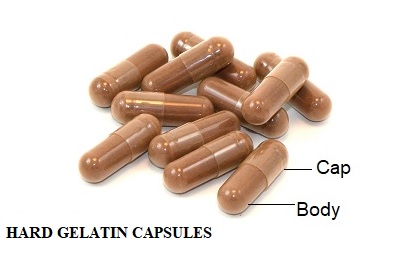
2. Capsules
- These are similar to tablets in the ease of administration.
- They have two gelatin shells in which active drug ingredients are packed.
- They are also quite popular, like tablets, but are comparatively expensive to make.
- The advantage is that they can include a liquid form of a drug and also incompatible formulations in their shells.
3. Chewable tablets
- These are similar to tablets in appearance, but they are large in size with attractive colors, odor, and sweet taste.
- They are meant to be chewed in the mouth for the drug to release and show its effects. Ex: Antacid tablets.
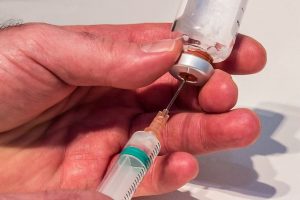
4. Injections
These are solution-based formulations that are given by the parenteral route.
They are preferred for an unconscious patient or in case of an emergency.
The drug action by this method starts almost immediately.
They are of different types based on the site of injection.
5. Powders
- These are solid dosage forms and are in powder format.
- They are used for dusting and external applications, such as on wounds, cuts, skin infections, etc.
6. Solutions
These are very popular formulations, having a drug dissolved in a suitable solvent.
Swallowing a fixed volume of liquid solution provides sufficient drugs needed for the body treatment.
These solutions are clear liquids but can have color, taste, and an acceptable odor.
These are commonly used for elderly patients and children.
The advantage is the faster onset of action and better drug absorption compared to tablets.
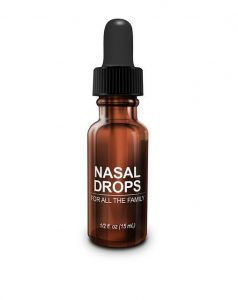
Eg, Oral syrups, eye drops, ear drops, nasal drops, etc.
7. Emulsions
- This is an interesting formulation in which a water-insoluble drug is made into a liquid by adding a soap-like emulsifying agent.
- This emulsifying agent disperses the water-insoluble drug as fine particles or globules in water by forming a film or covering around the drug particles. Read more on types of emulsions.
8. Suspensions
- These are liquid formulations, but the difference is that they have fine solid particles dispersed in an aqueous liquid.
- These formulations tend to form cream when kept undisturbed for a long time. Hence, they have the label “SHAKE WELL BEFORE USE.”
- This helps the settled cream to disperse for uniform dosing of the drug.
9. Ointments
- These are semi-solid dosage forms.
- They can be either solutions, suspensions, or even emulsions, but have high viscosity.
- They are intended for application on the skin and other surfaces by spreading.
- They are easy to use and have the advantage of local effects to minimize the adverse effects of drugs.
10. Effervescent granules
- They are also in the form of effervescent tablets.
- They undergo a chemical reaction to produce carbon dioxide gas when put into water.
- This, when swallowed, removes any gas from the stomach and helps in relieving gastric acidity.
11. Aerosols
- These are powder or liquid formulations that are applied by spraying.
- The formulation is released as a gaseous dispersion and so can reach deeper locations like the respiratory tract.
12. Gases
Pure gases like oxygen, carbon dioxide, and nitrogen are also used as drugs.
13. Suppositories
These are solid dosage forms that are intended for insertion in the anus. They release drugs slowly and are good for local action.

Pharmacology Quiz Mastery
Test your knowledge with 1,000+ high-yield pharmacology MCQs and detailed rationales. Practice offline anytime.
Get it on Google Play
Very educative
Thanks!
It's educative
Its really educating
This great. Thanks very much.
Thank very much it was very good