The human body has different organs located in various parts of the body. These organs work together to form 11 human body systems that play a vital role in body physiology.
The organ systems include
- Skeletal system
- Muscular system
- Respiratory system
- Cardiovascular system (Circulatory system)
- Digestive system
- Nervous system
- Endocrine system
- Reproductive system
- Urinary system
- The lymphatic system (Humoral system)
- Integumentary system
| Organ System | Key Organs Involved | Primary Physiological Function | Common Disorder (High-Intent Keyword) |
|---|---|---|---|
| Skeletal | Bones, Cartilage, Ligaments | Structural support and mineral storage | Osteoporosis, Arthritis |
| Muscular | Skeletal, Cardiac, and Smooth muscles | Movement, heat production, and posture | Muscular Dystrophy, Fibromyalgia |
| Cardiovascular | Heart, Arteries, Veins, Capillaries | Transport of oxygen, nutrients, and waste | Hypertension, Heart Failure |
| Respiratory | Lungs, Trachea, Bronchi, Pharynx | Gaseous exchange (O2 in, CO2 out) | COPD, Asthma |
| Digestive | Stomach, Intestines, Liver, Pancreas | Nutrient breakdown and absorption | GERD, Celiac Disease |
| Nervous | Brain, Spinal Cord, Peripheral Nerves | Master control and rapid communication | Multiple Sclerosis, Epilepsy |
| Endocrine | Pituitary, Thyroid, Adrenal Glands | Hormonal regulation of metabolism/growth | Diabetes Mellitus, Hypothyroidism |
| Lymphatic | Spleen, Thymus, Lymph Nodes | Immune defense and fluid balance | Lymphedema, Lymphoma |
| Urinary | Kidneys, Bladder, Ureters | Waste excretion and pH balance | Chronic Kidney Disease (CKD) |
| Reproductive | Ovaries/Testes, Uterus, Prostate | Continuation of species and hormones | PCOS, Infertility |
| Integumentary | Skin, Hair, Nails, Sweat Glands | Protection, sensation, and thermoregulation | Psoriasis, Dermatitis |
An organ is made of a group of tissues and these tissues are in turn formed from a group of cells.
A group of organs working together towards a common goal is classified as an organ system.
Details on Body Systems with Functions
1. Skeletal system
- This system consists of the body’s bones.
- These bones are made of bone and cartilage cells that have hardened.

- They provide the body with a proper shape, frame, and support for the organs.
- In some places, they form bony compartments.
- These compartments include the skull and thorax, eye sockets, etc., which protect essential organs such as the brain, heart, lungs, and eyes.
- The skeletal system is also flexible and movable at places called joints.
- These joints help the body move and coordinate with skeletal muscles.
Clinical Significance:
- Disorders like Osteoporosis (reduced bone density common in postmenopausal women) and Osteoarthritis (cartilage degradation) are major health concerns in the aging US population. Clinically, the red bone marrow of long bones is also the site for Hematopoiesis; conditions like Leukemia or Anemia directly involve skeletal health.
2. Muscular system
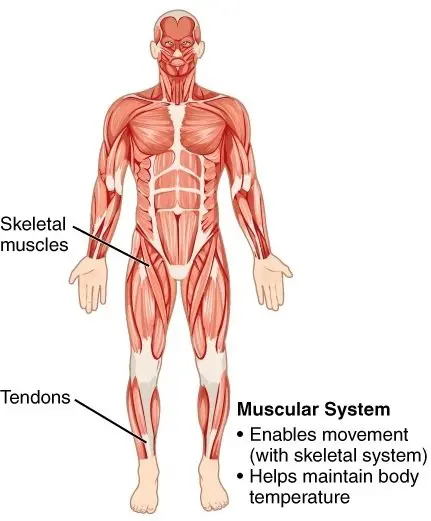
- This system comprises muscles responsible for body movement.
- They are of three types: skeletal, cardiac, and smooth muscles.
- Skeletal muscles help in moving the body from one place to another. Functions like walking, running, moving, lifting, and bending are possible due to skeletal muscles.
- On the other hand, the cardiac muscles form the heart and help pump blood. It forces the blood to flow through the arteries to reach the deep and remote areas of the body.
- Meanwhile, smooth muscles are present in organs such as the stomach, intestine, uterus, and urinary bladder.
- These smooth muscles initiate movement within the body to support physiological function.
Clinical Significance:
- Pathological conditions such as Muscular Dystrophy and Myasthenia Gravis involve disruptions of the neuromuscular junction.
- Pharmacologically, skeletal muscle relaxants are often used during surgical procedures to facilitate intubation and improve muscle relaxation.
3. Respiratory system
- The respiratory system helps in gaseous exchange.
- It helps absorb atmospheric oxygen from the air and supply it to the body, while removing carbon dioxide from the body and releasing it into the air.
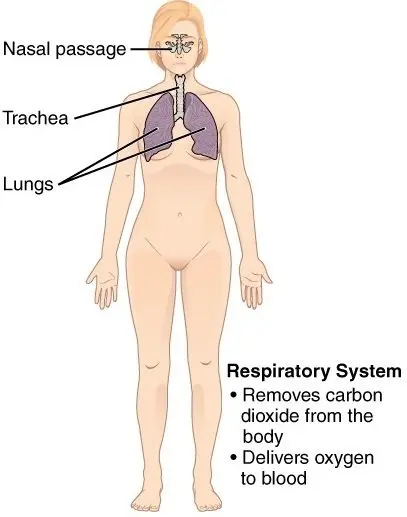
- The respiratory system comprises organs such as the nose, larynx, bronchi, and lungs.
- The path is called the respiratory tract, and a diaphragm (a skeletal muscle) separates it from the abdomen.
- Oxygen is absorbed from the alveoli of the lungs into the blood and carried to the tissues. In tissues and cells, it helps generate energy by oxidizing glucose in mitochondria.
- Besides, the respiratory system also helps in speech (making sounds), excretion by exhalation (alcohol), and metabolism.
Clinical Significance:
- Chronic conditions such as COPD (Chronic Obstructive Pulmonary Disease) and Asthma are major diseases caused by the deranged respiratory system.
- The respiratory system is also the primary site for administering inhaled medications, taking advantage of the alveoli’s high surface area for rapid drug absorption.
4. Cardiovascular system
- The cardiovascular system circulates the blood in the body.
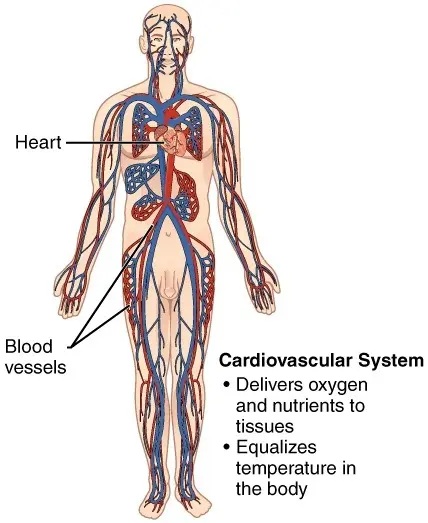
- It comprises blood and blood vessels, such as arteries, veins, capillaries, and the heart.
The main functions of this system are
- Maintenance of uniform temperature,
- Supply of oxygen and nutrients to all the cells and tissues
- Waste matter is collected and transported to the urinary system.
- To carry hormones to the target organs.
Clinical Significance:
- This system is central to some chronic life-threatening disorders like Hypertension, Atherosclerosis, and Heart Failure.
- Pharmacologically, it is the most targeted system for life-saving drugs, including Beta-blockers, ACE inhibitors, and Statins.
5. Digestive system
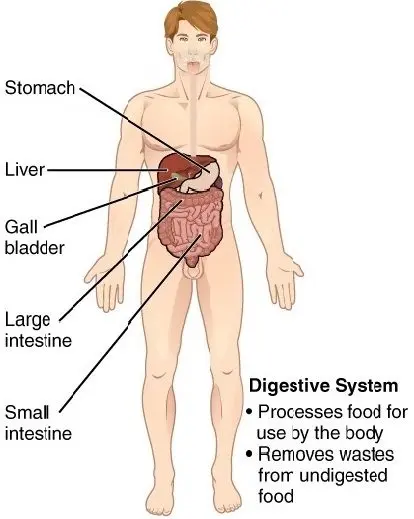
- This system is meant to break down food and absorb nutrients into the bloodstream.
- It consists of the mouth, teeth, esophagus, stomach, liver, pancreas, intestine, rectum, and anus.
- It is the only route through which the food can enter the body.
- The food is broken down into smaller forms, such as glucose, amino acids, and fatty acids, for easier absorption into the body.
Clinical Significance:
- Clinical focus often falls on GERD (Gastroesophageal Reflux Disease) and Peptic Ulcers.
- Pharmacologically, the liver (an accessory organ) is the primary site of First-Pass Metabolism, which determines the bioavailability of orally administered drugs.
6. Nervous system
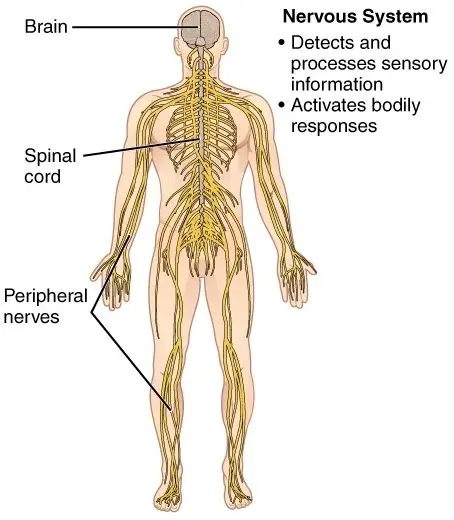
- This is called the master body system, as it controls all the other organ systems of the body.
- The nervous system regulates homeostasis, body physiology and function, and movement.
- It has a brain, spinal cord, and somatic and autonomic nerves (sympathetic and parasympathetic nervous systems).
- It stimulates the release of hormones when needed to control other systems.
- It regulates body movements through muscles and controls respiration, heartbeat, digestion, urination, etc.
Clinical Significance:
- Neurodegenerative diseases like Alzheimer’s and Parkinson’s involve the central nervous system,
- Peripheral Neuropathy (often caused by Diabetes or autoimmune conditions) affects the peripheral nerves.
7. Endocrine system
- This system complements the nervous system.
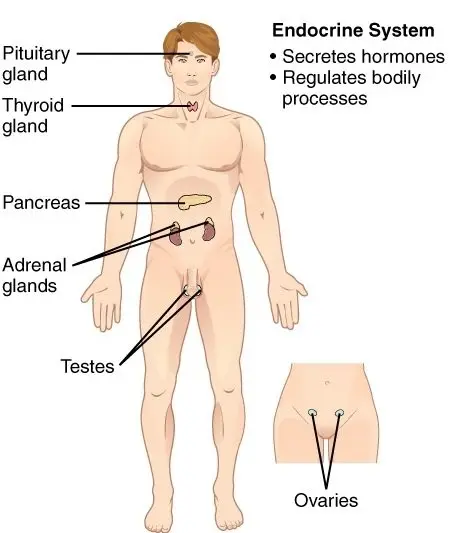
- Endocrine glands like the pituitary, thyroid, parathyroid, pancreas, pineal, adrenal glands, testes, and ovaries are present in this system.
- The glands secrete specific hormones that act on different systems of the body and induce changes. These hormones are chemical messengers.
- For example, melatonin, a pineal gland hormone, induces sleep at night.
Clinical Significance:
- Diabetes Mellitus (Type 1 and Type 2) is the most prevalent endocrine disorder.
- This system is also responsible for thyroid dysfunctions and long-term hormonal replacement therapy in women.
8. Reproductive system
- This is the organ system that is responsible for the continuation of the species.
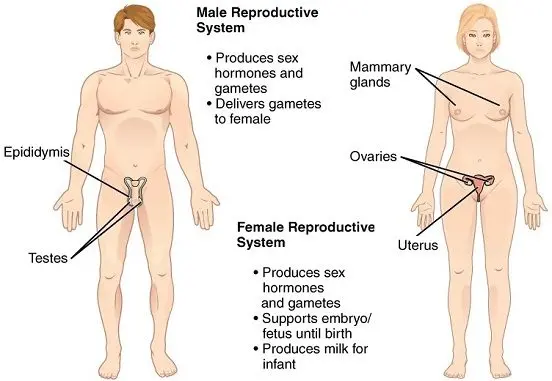
- It helps in the formation of offspring to keep up further life.
- In males, it comprises organs such as the testes, penis, and prostate glands.
- In females, it consists of the vagina, uterus, uterine tubes, ovaries, and the mammary glands (breast).
- This system is quite interesting in that it is a single set that depends on the opposite sex for its essential physiological processes.
Clinical Significance:
- Issues such as PCOS (Polycystic Ovary Syndrome) in women and Infertility are key clinical issues affecting this system.
- This system is also the target for hormonal contraceptives and treatments for hormone-dependent cancers (like prostate or breast cancer).
9. Lymphatic system
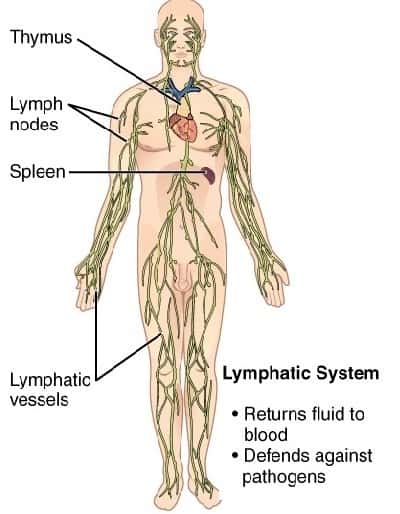
- This system provides a natural defense for the body. It kills bacteria, viruses, and other parasites residing in the body.
- It comprises fluid lymph, lymph nodes, lymph organs (like the spleen, tonsils, and thymus), white blood cells, and antibodies (humoral substances).
- The lymphatic system is arranged in parallel to the blood circulation and is widely distributed throughout the body.
- You can find it in the intestines, kidneys, liver, and brain, where it traps pathogens and prevents their further spread by destroying them.
Clinical Significance:
- Lymphedema and Lymphoma are the primary clinical pathologies of this system.
- Besides, vaccination protocols aim to trigger the lymphatic system’s adaptive immune response, utilizing lymph nodes as primary sites for antigen presentation and the production of long-term memory cells.
10. Urinary system
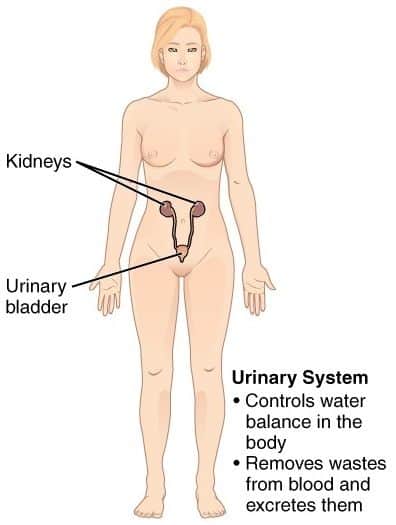
- This system, as its name suggests, forms urine as its end product.
- It is meant to remove the wastes and other toxins from the body.
- This system has a pair of kidneys, a pair of ureters, one urinary bladder, and a urethra.
- Any substance in the body is converted to a water-soluble form by metabolism.
- The blood transports this to the kidneys.
- When blood flows through the nephrons in the kidneys, it is filtered, releasing those wastes.
- This waste product, called urine, is expelled from the body through urination.
- The load on the kidney is reduced, as other organs, such as the skin, lungs, and saliva, also participate in excreting waste from the body.
Clinical Significance:
- Chronic Kidney Disease (CKD) and Urinary Tract Infections (UTIs) are major clinical issues.
- The kidneys are essential for maintaining acid-base balance and are the primary route of renal excretion for most water-soluble drugs.
11. Integumentary system
- This is a covering system that covers the whole body surface.
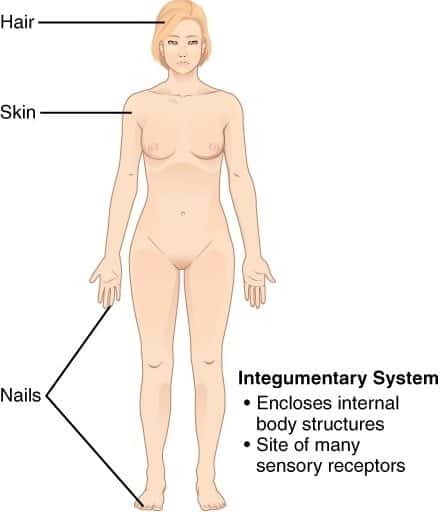
- The organs under this system include the skin, hair, and nails.
- It prevents dehydration and heat loss.
- It also protects the body from damage, wear, and infection by acting as a physical barrier against bacteria and other microbes.
Clinical Significance:
- Disorders include Psoriasis, Melanoma, and severe burns.
- Clinically, the skin is used for Transdermal Drug Delivery (patches), bypassing the digestive system for steady-state drug levels.
Thus, from the above, it appears that the organ systems are all interconnected and collaborate in functions.
If one system is affected, the others are affected and cease to function.
For example, the digestive system is concerned with the digestion and absorption of food.
If this is disturbed, the supply of nutrients to others is inhibited, and whole organ systems are affected.
Frequently asked questions and answers.
What organ systems work together?
Organ systems like the nervous and endocrine systems, the circulatory and urinary systems, and the skeletal and muscular systems work together.
Which organ systems contain the eye?
The eye can be considered part of the nervous system, as it is located in the brain compartment and is mainly composed of nerves.
What body systems work together to maintain blood pressure?
The nervous, circulatory, and urinary systems maintain blood pressure.
What organ systems work together to maintain homeostasis?
The nervous system and endocrine systems maintain homeostasis. The nervous system detects changes and transmits signals by regulating hormone release.
Which organ systems work together to release energy from food
The systems involved in the release of energy from food include the digestive system, which breaks down the food; the respiratory system, which supplies oxygen for oxidative phosphorylation; and the circulatory system, which carries the digested food and oxygen to the cells and tissues where energy is released.
Which two organ systems work together to inhale oxygen
The nervous and respiratory systems are mainly involved.
The respiratory center in the brain triggers breathing. At the same time, lungs take in air.
What 2 body systems work together to help you move
This would be the skeletal system and the muscular system.
What system protects the underlying organs from drying out
The circulatory system, in coordination with the nervous system, protects the underlying organs from drying out.
Which system gets rid of unwanted waste
Unwanted waste is removed by a combined work of two or three systems, like
1. Urinary system
2. Circulatory system
3. Digestive system (liver and gut)
👉 The urinary system helps to clear the waste from the blood.
👉 The liver converts the water-insoluble waste into water-soluble forms so that they can be removed by urine.
👉 The circulatory system helps transport waste to the excretory organs from all over the body.

not really
Hi William, updated as per your advice.
Please in all your articles, give the author's names. Thankyou
thank you for sharing. very informative.
Hi,
This summer I made a great discovery. For more than one year I suffered of urinary urgencies with severe burning. I sort foods with little result. Sugar was the worst. I accused bread, milk, sweet fruits, salt, pickles, and so on. I considered normal at my 75 age. I had an inguinal hernia surgery and I accused that for my urinary tract irritation and urine produced burnings, especially the muscle responsible to prevent urine from leaving the bladder. I used dippers. I also consider to have sun-bathing this summer for vitamin D.
I live in Washington state so here is not warm enough to stay in sun. Years ago, I bought a land in Nevada near the city Winnemucca, where the temperature is 96 F and I can stay in sun without to experience cyclic vomiting syndrome.
For more than one year I used to eat sausages and bologna turkey. I noticed some itching infection on my chest and legs. During my travel to Nevada 700 miles, I eat just those foods. Once on my land I discovered on my chest another spot of infection with white heads. The conclusion was obvious, the foods I eat are responsible. I did not eat that kind of meat. After 4 weeks of staying in sun my chest become clean and no more itching on my chest and legs. Now I am back in Washington and I can eat bread, milk, gem, donuts and no more that urinary urgencies and no more dippers.
I also use warm clothes to prevent and cure infections. I feel great.
Please let people to know my discovery.
if someone is interested write on my email davidmuresan@live.com
David Muresan