Ozempic (semaglutide) is a selective GLP-1 receptor agonist;
Mounjaro (tirzepatide) is a dual GIP/GLP-1 receptor agonist.
In all the head-to-head experiments conducted to date, tirzepatide has produced greater reductions in HbA1c and greater weight loss than semaglutide.
Ozempic vs. Mounjaro: Comparison Guide
| Feature | Ozempic (Semaglutide) | Mounjaro (Tirzepatide) |
|---|---|---|
| Pharmacologic Class | Selective GLP-1 Receptor Agonist | Dual GIP / GLP-1 Receptor Agonist |
| Receptor Affinity | Pure GLP-1 selective | Dual affinity (GIP-skewed, biased GLP-1 signaling) |
| T2DM Brand | Ozempic | Mounjaro |
| Weight Loss Brand | Wegovy | Zepbound |
| Glycemic & Weight Efficacy | High | Superior (Outperforms semaglutide in head-to-head trials) |
| Dosing Frequency | Once weekly SC (also daily oral as Rybelsus) | Once weekly SC only |
| Max Weekly Dose (T2DM) | 2.0 mg | 15.0 mg |
| Key Clinical Advantage | Proven MACE & CKD progression reduction | Greater overall HbA1c and weight reduction |
| Key Oral Interaction | Delayed absorption of narrow-index oral drugs | Delayed absorption; requires extra barrier contraception for 4 weeks after dose escalation |
| Boxed Warning | Thyroid C-Cell Tumors / MTC / MEN 2 | Thyroid C-Cell Tumors / MTC / MEN 2 |
1. Mechanism of Action
Semaglutide: It is a homologous analog of human GLP-1 that selectively binds and activates the GLP-1 receptor, leading to
- Glucose-dependent insulin secretion
- Glucagon suppression
- Slowed gastric emptying
- Hypothalamic appetite suppression
Tirzepatide: It is a single peptide chain engineered from the native GIP backbone that activates both GIP and GLP-1 receptors (a single molecule with dual affinity).
Key High-Yield Receptor Dynamics:
- Imbalanced Affinity: Tirzepatide binds the GIP receptor with native-level affinity, but binds the GLP-1 receptor with ~5-fold weaker affinity than native GLP-1 (skewed toward GIP).
- Biased Agonism: At the GLP-1 receptor, tirzepatide favors cAMP generation over β-arrestin recruitment, resulting in reduced receptor internalization. Because β-arrestin normally limits the insulin response to GLP-1, this bias enhances overall insulin secretion.
- Protraction Mechanism: Both drugs have C-terminal fatty-acid acylation that promotes albumin binding, thereby extending their half-lives and enabling once-weekly subcutaneous (SC) dosing.
2. Pharmacokinetics
| Parameter | Semaglutide (Ozempic) | Tirzepatide (Mounjaro) |
|---|---|---|
| Half-life | ~7 days | ~5 days |
| Protraction | Albumin binding via fatty acid side chain | Albumin binding via the C20 fatty acid moiety |
| Time to Steady State | ~4–5 weeks | ~4 weeks |
| Elimination | Proteolytic cleavage + β-oxidation | Proteolytic cleavage + β-oxidation |
| Administration | Once weekly SC (or daily oral tablet as Rybelsus) | Once weekly SC only |
Because both drugs delay gastric emptying, absorption of co-administered oral drugs can be affected, particularly narrow-therapeutic-index agents (see Section 6).
The oral semaglutide tablet is a distinct formulation (co-packaged with SNAC, an absorption enhancer) and has a different pharmacokinetic profile from the injection — students should not conflate oral and SC dosing regimens on exams.
3. FDA-Approved Indications and Brand Distinctions
A frequent source of confusion in board exams is confusing the brand names with each underlying active molecule:
| Molecule | T2DM brand | Weight-management brand |
|---|---|---|
| Semaglutide | Ozempic | Wegovy |
| Tirzepatide | Mounjaro | Zepbound |
Ozempic On-Label Indications:
- Glycemic control in T2DM
- MACE (Major Adverse Cardiovascular Events) reduction in T2DM with established CVD (cardiovascular disease).
- Reduction of risk of kidney failure/death in T2DM with chronic kidney disease (CKD).
Mounjaro On-Label Indications:
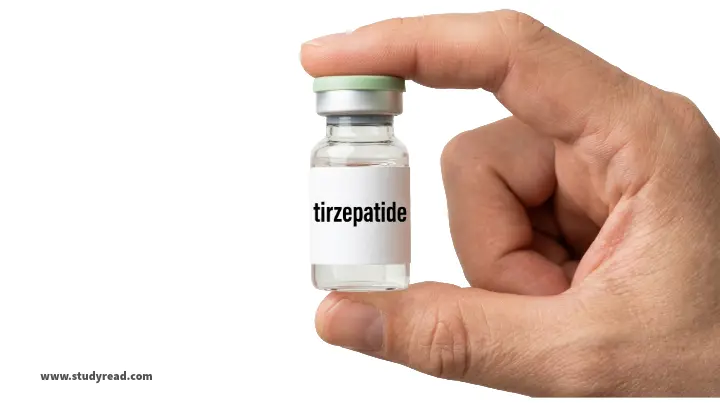
- Glycemic control in T2DM as an adjunct to diet/exercise. (Note: Zepbound carries additional indications, such as obstructive sleep apnea in adults with obesity).
Board Trap: Neither Ozempic nor Mounjaro is officially indicated for weight loss alone—their weight-loss formulations are marketed as Wegovy and Zepbound, respectively.
4. Dosing and Titration
Both drugs use start-low-go-slow titration to blunt GI adverse effects; the schedules are not interchangeable and should never be cross-applied.
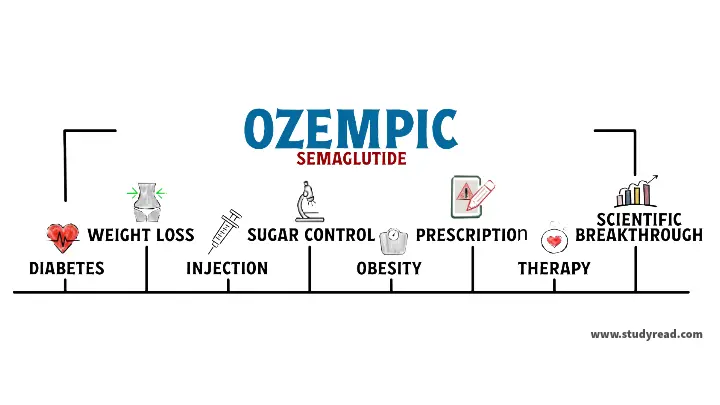
- Ozempic: start 0.25 mg SC weekly ×4 weeks (non-therapeutic priming dose) → 0.5 mg weekly ×4 weeks → titrate to 1 mg, then 2 mg weekly as needed for glycemic control.
- Mounjaro: start 2.5 mg SC weekly ×4 weeks (non-therapeutic) → increase in 2.5 mg increments every 4 weeks → 5 mg → 7.5 mg → 10 mg → 12.5 mg → 15 mg (maintenance range typically 5–15 mg).
Mounjaro’s ladder has six steps versus Ozempic’s four to five, reflecting the additional GIP-receptor engagement that must be dose-escalated alongside GLP-1 activity.
For exact mg-to-week mapping and missed-dose rules, use the StudyRead dosing calculator rather than memorizing every intermediate step — the clinically relevant fact for boards is the sequence and rationale of titration, not the exact week number.
5. Head-to-Head Efficacy Data
SURPASS-2 (Type 2 Diabetes):
- Tirzepatide demonstrated greater reductions in HbA1c and weight loss than semaglutide 1 mg across all studied doses (5 mg, 10 mg, and 15 mg).
SURMOUNT-5 (Obesity without Diabetes):
- Tirzepatide produced a significantly greater total body weight reduction than semaglutide and had lower GI-related discontinuation rates.
6. Adverse Effect and Safety Profile
| Category | Ozempic (Semaglutide) | Mounjaro (Tirzepatide) |
|---|---|---|
| Common Side Effects | Nausea, vomiting, diarrhea, constipation, abdominal pain | Identical GI profile (slightly lower discontinuation rate in trials) |
| Boxed Warning | Risk of Thyroid C-Cell Tumors (Medullary Thyroid Carcinoma) | Identical Class-Wide Boxed Warning |
| Absolute Contraindications | Personal/family history of MTC; MEN 2 syndrome | Personal/family history of MTC; MEN 2 syndrome |
| Warnings & Precautions | Acute pancreatitis, acute kidney injury (secondary to dehydration), gallbladder disease, and diabetic retinopathy complications | Same class warnings, plus post-marketing surveillance for severe gastroparesis/ileus |
Both drugs carry the identical boxed warning — this is a class effect of GLP-1 receptor agonism, not something that distinguishes the two on an exam. The MTC/MEN2 contraindication is the single most testable absolute contraindication for this drug class.
7. Drug Interactions and Practical Points
- Delayed gastric emptying is the dominant interaction mechanism for both agents — it can slow and reduce peak absorption of concomitant oral medications. This is most clinically relevant for narrow-therapeutic-index oral drugs (e.g., oral contraceptives, warfarin, levothyroxine) and other orally administered agents requiring precise timing; counsel patients and monitor as clinically indicated rather than assuming a fixed dose adjustment.
- Insulin and insulin secretagogues (sulfonylureas): concurrent use increases the risk of hypoglycemia with either GLP-1/GIP agent. So dose reduction of secretagogue or insulin is often required on initiation.
- Oral semaglutide specifically requires strict dosing conditions — empty stomach, ≤4 oz water, wait 30 minutes before food/other oral drugs — because the SNAC absorption enhancer’s effect is highly sensitive to gastric pH and food. This requirement does not apply to the SC Ozempic injection or to Mounjaro, which has no oral formulation.
- Neither drug requires renal or hepatic dose adjustment per current labeling, though caution is advised in severe GI-associated volume depletion, which can precipitate acute kidney injury.
8. Summary
- Ozempic = Pure GLP-1 RA | Mounjaro = Dual GIP + GLP-1 RA (GIP-biased).
- Head-to-head performance: Tirzepatide > Semaglutide for both glycemic control and weight reduction (SURPASS-2 & SURMOUNT-5).
- Boxed Warning: Medullary Thyroid Carcinoma (MTC) / MEN 2 syndrome applies equally to both.
- Brand mapping: Diabetes = Ozempic / Mounjaro; Obesity = Wegovy / Zepbound.
- Dosing: Mounjaro features a longer titration ladder (2.5 mg increments) due to dual-receptor recruitment
References
- Tirzepatide versus Semaglutide Once Weekly in Patients with Type 2 Diabetes (SURPASS-2). N Engl J Med.
- Tirzepatide versus Semaglutide for Obesity Management (SURMOUNT-5). N Engl J Med.
- Efficacy of tirzepatide versus semaglutide in achieving therapeutic targets: post hoc analysis of SURPASS-2. Diabetologia.
- Tirzepatide is an imbalanced and biased dual GIP and GLP-1 receptor agonist. JCI Insight..
- Mechanisms of action and therapeutic applications of GLP-1 and dual GIP/GLP-1 receptor agonists. Frontiers in Endocrinology.
- Novo Nordisk. OZEMPIC (semaglutide) injection — full U.S. Prescribing Information, including Boxed Warning. FDA label.
- MOUNJARO (tirzepatide) injection — full U.S. Prescribing Information. Eli Lilly and Company.
- SURMOUNT-5: Greater Loss of Weight, Waist Circumference With Tirzepatide Than Semaglutide—American College of Cardiology.
