Insects are the only animals that man could never dominate. The importance of insects is related to their uses to humans like
- Food
- Medicine
- Clothing
- Wax production
- Pollination
- Pest control
- Scavenging nature, etc.
Insects are so robust and widely distributed on the Earth.
Some of the insects are harmful as they cause diseases like malaria, elephantiasis. At the same time, others like lice and bed bugs act as external parasites to humans.
But interestingly, some insects are also beneficial to humans.
The importance of Insects can be read like that of man, agriculture, and even the environment.
Economic Importance of Insects to Man
a. For food.
- Many insects are consumed as food by humans. This eating of insects is called entomophagy.
- Insects are rich in protein and also small amounts of unsaturated fatty acids, vitamins, and iron.
- Hence, insects like the House cricket, European migratory locust, and Mealworms are grown on a large scale in industry.

- The processed food produced in North America, Europe, and Canada includes insect burgers, insect bread, insect flour, etc.
- Despite insect food being nutritious, there are some disadvantages.
- Sometimes, these insects can accumulate heavy metals, pesticides, and harmful bacteria.
b. For medicine
- Though insect therapy is used in other streams of medicine, modern medicine has limited uses.
- Honey bee venom has the peptide melittin, which helps to treat inflammation of rheumatoid arthritis.
- Maggot therapy is where maggot larvae are used to treat nonhealing diabetic wounds.
- Silk is a protein fiber used for bone grafting, spinal cord repair, and to promote wound healing. This is a natural fiber and has the least allergic immune responses.
- Poison from spiders and scorpions is used in chronic pain relief and also to treat muscular dystrophy.
c. For silk cloth
- Silk is a natural protein fiber obtained from the silkworm. It is a shiny, smooth, and soft fiber that is used in making beautiful clothing material.
- In the summer, it absorbs sweat, and in the winter, it gives warmth. Further, it protects from blood-sucking insects like mosquitoes as they cannot pierce the silk cloth.
- It’s an expensive cloth and supports the sericulture industry.
Further, a modified form of silk thread is used as a nonabsorbable surgical suture.
d. For lac production.
- Lac is produced by the lac insect. This lac is a resin secretion.
- It is also used in making skin cosmetics, wood finishes, and dye.
- Even the toys and other valuable products are made from it.
- Further, it is used as a sealing wax for envelopes.
Importance of Insects in Agriculture
A. For pollination
Pollination, as you might have known it is a method of sexual reproduction in plants.
Insects get attracted to flowers due to color and reach them to suck nectar.
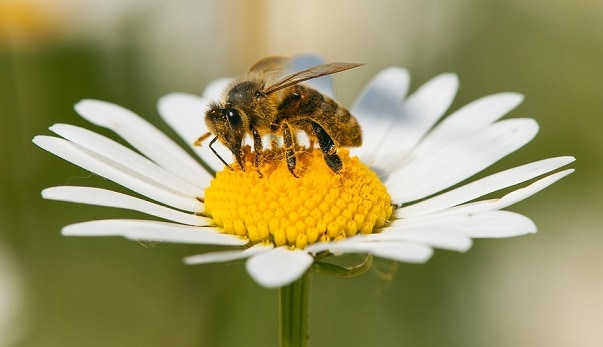
- In doing so, the pollen grains from flowers (male gametes) get attached to their limbs, winds, and other body parts.
- When these insects visit the next flower, this pollen is shed over that flower. Upon reaching the stigma of a new flower, the pollen merges with the ovule and forms an embryo.
- Thus, insects are biological agents that help in the cross-pollination of plants in agriculture. Thus, they help in improving the yield of crops.
b. Pest control for agriculture
- Insects are used for pest control. There are two types, like predators and parasitoids.
- Predators are those insects that consume other insects.

Example: Lady beetles consume mites, caterpillars, termites, etc.
- Parasitoids are those insects that lay their eggs on the surface or inside other insects.
- From the eggs, larvae emerge and feed on the host insect-killing it.
- Examples of these are the wasps, which use caterpillars as host.
- Also, the ladybugs that eat up aphids and other insect larvae growing on crops.
- Thus, these ladybugs act as pest killers to save the crop from destruction.
c. Honey
- Some farmers even raise honey bees to produce honey on their farms.
- Thus, growing honey bees will increase the revenue of the farmers.
Importance of Insects to the Environment:
a. Pollination
- Pollination is a method of sexual reproduction in plants.
- Like in agriculture, insects help in the cross-pollination of plants in the environment.
b. Scavengers
- Many insects eat up or carry away dead and decaying matter.
- Thus, they consume them and are clear of any waste matter from the environment. Ex: ants take away and feed on dead insects, larvae, lizards, etc.

- You might have even noticed dung beetles carrying away spherical balls by rolling. These balls are either human waste or the dung of cattle.
- They make them into balls and carry them away to eat. Thus, they help clean the environment.
c. Food for other animals
- Many insects live on grass and plants for food.
- But in turn, they become prey to many birds, amphibians, fish, lizards, and other animals.
- Thus, they act to supply food to the members of the food chain.
- Hence, notice that during the rainy season, many insects reproduce and multiply a lot.
- At the same time, many birds go to hatch their young ones.
- This time is very suitable as the mother bird can feed its babies with vast numbers of insects.

Thanks for good research. Do More
Well explained. Thank you so much.
Simple and straight forward
Great n intresting