Roots are the important parts of the plant and trees. For plants, they are useful for
- Fixing the plant firmly to the soil,
- Provide water,
- Provide minerals and manures,
- Storage of food,
- Excretion of waste,
- Supports the life of other organisms.
For humans
- Source of food
- Provides vital medicine and drugs,
- Source of fiber,
- Help in Plant propagation,
Plant fixation:
- Plants are organisms that do not move in their lifetime.
- They grow and die in the same place where they are born.
- This ability to stay in one place is due to their root system.
- These roots fix the plants and trees firmly in the ground.
- Hence, the main use of roots to plants is the firm fixation in the soil.
- Even heavy winds, floods, and tsunamis would be unable to uproot the plants.
Such is the strength of roots in fixing the whole plant in the soil.
Absorb water:
- The second major use of roots to plants includes the water supply.
- Plants require a continuous supply of water.
- This is necessary to move the sap in the plant from the root to the stem, branches, and leaves at the top.
- The water helps to manage the body temperature of the plant, support cellular respiration, photosynthesis, etc.
- This water is supplied by the root system from the soil.
- The soil water is present as plant-available water.
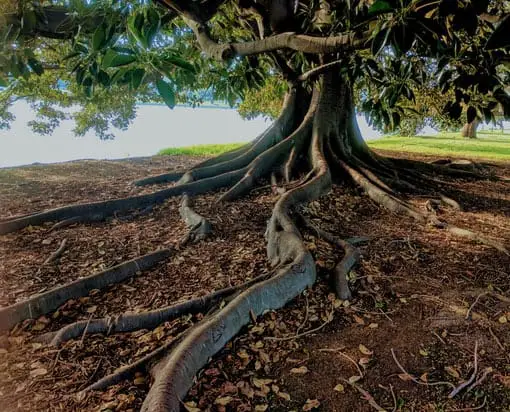
- The roots keep on growing through the entire life of the plant to different regions below the ground in search of water for the plant.
- So sometimes they grow to a few meters if needed.
Provide minerals and manure.
- Besides water, roots also supply manure and minerals from the soil to the plants.
- These are essential for plant growth and physiology. Minerals include macro and microelements. Manures include ammonia, nitrogen, etc.
Storage of food:
- Some plants have storage roots in which they store their food materials.
- These include carrot, radish, beet root, turnip, onion, groundnut, etc.
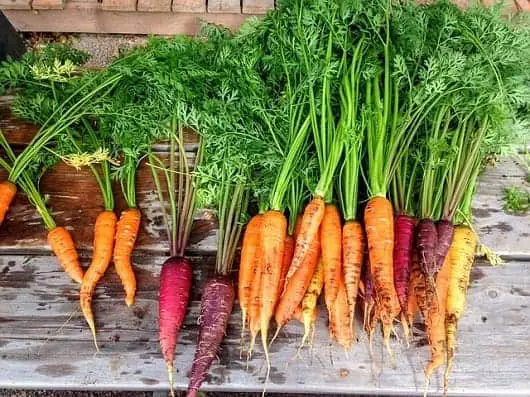
- This food is meant for future consumption by the same plant.
- But animals and humans can feed on these stored food roots.
Waste expulsion:
- Roots also help to expel the waste from the plant body.
- Accumulation of this waste could be toxic to the plant.
Help in Plant propagation:
- Roots of some plants help to produce a new plant from the root cutting.
- Plants like raspberry, rose, blackberry, phlox, lilac, fig, trumpet vine, etc., can be grown by root cuttings.
- A 2 to 6-inch-long root cutting is stored in suitable conditions for 3 weeks and then transferred into soil.
- These grow into new plants.
See the method to grow a plant from root cuttings.
Uses of roots for man:
Source of root medicine and drugs:
- Roots are some of the important sources of life-saving medicines.
- Plant medicines like Rauwolfia, ipecac, ginseng, ashwagandha, etc., are obtained from the roots.
Source of fiber:
- Like leaves, the fiber from roots is used as brooms, brushes, baskets, etc.
Examples of these plants include Zacaton
Supports the life of other organisms.
- Many microbes and even other plants live on the roots.
- They derive nutrition and other essentials from roots.
- Some of them microbes even help the plant in return.
- An example of such bacteria is the rhizobium bacteria.
This is a bacterium that is present in the roots of leguminous plants.
These bacteria help fix nitrogen from the air as ammonia in the soil.
Thus, they provide manure to the plant. In return, they obtained food and shelter from the plant. This is called a symbiotic relationship.

plants are the best
Congratulations. Add more on “humans”
Thanks a lot, now I understood clearly and I get some answer
Thanks so much my work is so easy now