Modern hospitals rely on advanced technology to deliver the highest quality medical care.
Devices such as CT scanners, ECG and EEG machines, laparoscopes, and dialysis systems exemplify how biomedical engineering integrates physics, electronics, and biology to enhance diagnosis and patient care.
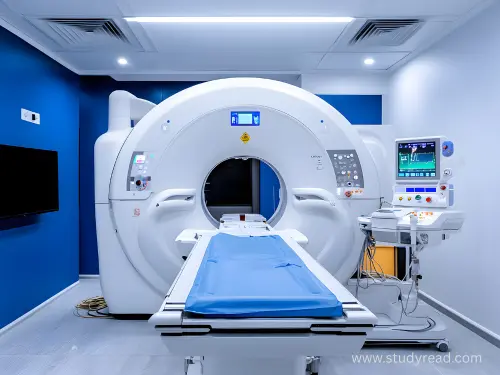
Biomedical engineering applies the principles of engineering to study, understand, design, and enhance biological and medical systems.
It helps the physicians visualize organs (through imaging), restore body functions (through prosthetics), and even replace failing organs (through biomaterials and artificial organs).
For example,
- Pacemakers, stents used in Cardiovascular conditions.
- Prosthetic limbs, bone plates used for musculoskeletal conditions.
- EEG, brain implants used in neurology
Biomedical engineering education integrates core engineering disciplines, such as mechanics, electronics, and computer science, with biomedical sciences, including physiology, anatomy, and biochemistry.
Students learn how physical laws and computational models can be applied to human systems—such as blood flow, nerve conduction, or imaging of organs.
Common subjects include biomechanics, biomaterials, bio-instrumentation, and medical imaging. These subjects train students to design devices that complement physiological functions—such as sensors to monitor heart rate or systems to analyze blood flow.
Biomedical engineering contributes directly to healthcare by:
- Designing diagnostic tools such as ECG and CT scanners.
- Developing surgical robots and precision drug-delivery systems.
- Creating artificial tissues, blood, and organ prosthetics using biocompatible materials.
- Supporting biomedical research through analytical instruments like HPLC, NMR, and spectrophotometers.
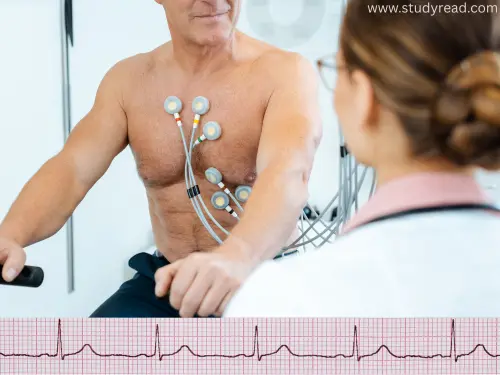
Applications of biomedical engineering in medicine and research include
♣ Providing biomedical instrumentation as diagnostic aids like CT-scan, ECG, x-ray, etc., for easy and effective diagnosis.
♣ Use of robots for drug delivery, surgery, etc.
♣ Making of organ substitutes like bones, tissues, teeth, artificial blood, etc., from biocompatible materials.
♣ In research, many instruments like HPLC, HPTLC, NMR, UV spectroscopy, stereotaxic instruments, microscopes, ELISA plate readers, etc
