Reproduction is the process of the continuation of a living species.
This continuation happens by giving birth to the progeny or offspring of the adult animal.
Reproduction is the only way to multiply the population for all living organisms.
This phenomenon extends from single-cell animals to multicellular organisms.
The process of reproduction occurs by two means, viz., asexual reproduction & sexual reproduction.
Asexual reproduction is one that occurs when one living organism gives birth to its progeny without the help of another organism of its own kind.
Sexual reproduction is quite different and is one that occurs when one animal (or plant) gives birth to its progeny with the help of other animals of its own kind.
Asexual reproduction occurs by means of either binary fission (bacteria, protozoans), or by segmentation (in fungi, algae) and budding (hydra), etc.
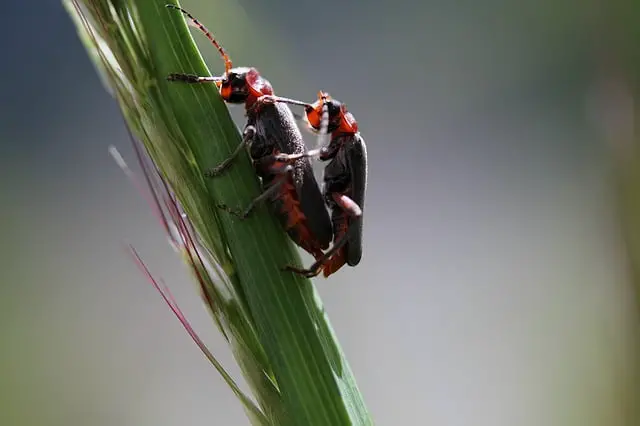
Sexual reproduction occurs by means of the exchange of male and female gametes between parent animals. In animals, there are specialized male and female organs, while in plants, there are flowers containing stamens (male organs) and stigma (female organs) for the purpose.
Here, there is an exchange of gametes, one from the male counterpart and the other from the female counterpart. So the gametes are termed male gamete and female gamete.
Both of these gametes have a haploid (1x) set of chromosomes. The union of gametes occurs to form a zygote, which is diploid (2x). This zygote transforms into an embryo and then develops into an organism.
As one goes upwards in the evolutionary tree, there is an absence of asexual reproduction in higher plants and animals. While only the lower forms reproduce asexually. The difference between sexual and asexual reproduction is small. But the effect is quite heavy in terms of the characters of the progeny born.
So asexual reproduction is limited to lower forms like bacteria, fungi, algae and protozoans.
Interestingly reproduction phenomenon gives rise to two distinct characteristics among animals and plants. This character is an animal that can be either male or female.
In plants, this is quite uncommon. There can be male plants and female plants, and sometimes both male and female gametes are formed in the same plant. There can also be differences in the same plant as male and female flowers to indicate differences. Again in the same flower, there can be both male and female organs.
Among animals, one can see this type of possession of both male and female sex organs in hermaphrodites. Some examples include earthworms, snails (mollusks), etc. This is absent in invertebrates (animals with vertebral columns).
Difference Between Sexual and Asexual Reproduction
The key differences are mentioned in the table below.
| Character | Asexual reproduction | Sexual reproduction |
| Seen in | Lower forms like bacteria | Seen in all higher plants and animals |
| Gametes | No gametes are formed | Male and female gametes are formed |
| Cell division involved | Only the mitosis type of cell division occurs | Meiosis type of cell division is involved, then mitosis continues. |
| Offsprings | Are identical to parents and lack robustness. | Are a bit different to parents but are more healthy and robust. |
| Prevalence | Present in less number of living forms | Present in most living organisms. |
| Genetic material | The genes and genetic material are just multiplied and passed on to new organisms from a parent. | The genetic material undergoes intermixing from both parents to form a new set of genetic materials. |
| Reproductive organs | Are not present or needed. | Prominent male and female reproductive organs are present. |
Also after reproduction, animals take care of their siblings till they mature and survive on their own. This is not required by organisms born by asexual methods.

It helps a lot in homework. My child had been helped a lot.
Nice
Comment Text*Wow this website really inspired nd taught me alot of things.I like this website it is a website for students.
I like this website it helps students well